World Affairs Luncheon Seminars
Schemel Forum events are sponsored by Munley Law.
Munley Law is a proud sponsor of the Schemel Forum. For over 65 years, their personal injury attorneys have been helping injury victims, including car accidents, truck accidents, and workers' compensation claims. There is a difference. Choose carefully.
All seminars are from 11:30 a.m. to 1 p.m. Buffet Lunch is served.
Free to University of Scranton and Geisinger College of Health Sciences students, staff, and faculty.
All seminars are included for Schemel Forum Members, Angels, and Archangels.
$30 per luncheon per person • $15 remote only
Friday, September 18
Work in Progress: Confessions of a Busboy, Dishwasher, Caddy, Usher, Factory Worker, Bank Teller, Corporate Tool, and Priest
In his most personal and lighthearted book yet, Father James Martin, S.J., reflects on the jobs that shaped him—busboy, dishwasher, caddy, factory worker. Drawing on his own stumbling, often hapless experiences as a boy, teenager, and young adult across the 1960s, '70s, and '80s, Father Martin offers a coming-of-age story unlike anything he has written before. It is a spiritual memoir told, as he puts it, "slant" in the tradition of Emily Dickinson, through the lens of work, failure, and human encounter. Illustrated throughout with personal photographs, Work in Progress surfaces small but enduring lessons about showing up, paying attention, extending kindness, and learning from the people and places we least expect. This event is presented in partnership with the University of Scranton's Jesuit Center.
Copies of Work in Progress will be available for purchase at the luncheon.
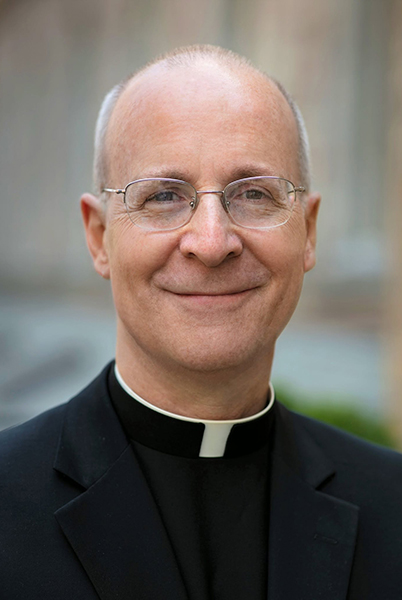 Rev. James Martin, S.J.,
Jesuit priest, editor at large of America magazine, consultor to the Vatican's Dicastery for Communication, and author of several New York Times bestsellers. Father Martin is a frequent commentator in the national and international media, including The Colbert Report, NPR's Fresh Air, The New York Times, and the Wall Street Journal.
DeNaples Center, McIlhenny Ballroom, 407 • 11:30 a.m. to 1 p.m.
Wednesday, October 7
The Coroner's Silence: Death Records and the Hidden Victims of Police Violence
Each year, thousands of people die during encounters with law enforcement across the United States. While a handful of cases capture national attention, most victims remain nameless, their stories untold. Dr. Terence Keel argues that many of these deaths are systematically underdocumented. In The Coroner's Silence, Keel investigates a troubling pattern within forensic medicine—how incomplete autopsy reports, mishandled medical documents, and critical gaps in the public record leave the full circumstances of in-custody deaths unexamined and unresolved. Through rigorous research, Keel makes the case that meaningful accountability requires more than procedural reform. It demands a fundamental reimagining of how our institutions investigate, document, and bear witness to deaths in state custody.
Copies of The Coroner's Silence will be available for purchase at the luncheon.
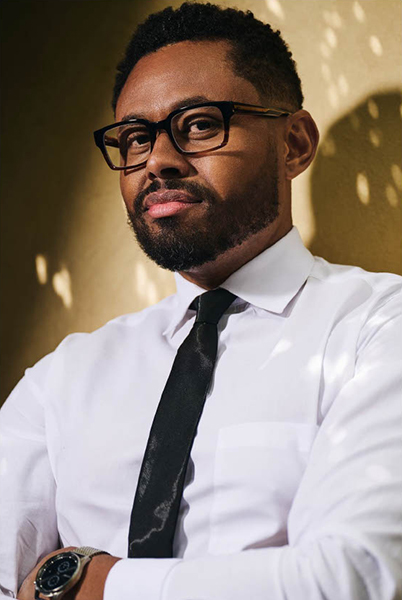 Terence Keel, Ph.D.,
Award-winning Professor of Human Biology & Society and African American Studies at the University of California, Los Angeles, and Founding Director of the Lab for BioCritical Studies. He is the author of Divine Variations: How Christian Thought Became Racial Science (Stanford University Press) and co-editor of Critical Approaches to Science and Religion (Columbia University Press). The Coroner's Silence has been named a finalist for the PROSE Award in Legal and Criminal Studies by the American Association of Publishers.
Brennan Hall, Rose Room, 509 • 11:30 a.m. to 1 p.m.
Friday, November 6
Jazz: From the Streets and Clubs to the Schools and Concert Halls
Victor Goines will explore the social, artistic, and historical forces that have shaped the evolution of jazz, tracing the genre's movement from community parades, neighborhood gatherings, and social clubs to its prominent place in universities and concert halls. The presentation will consider how jazz's grassroots, community-centered spirit continues to live alongside its recognition and preservation within major cultural and educational institutions.
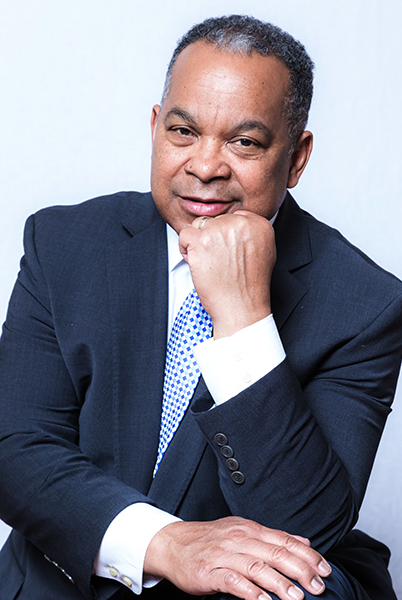 Victor GoinesJazz Chair at the New Orleans Center for Creative Arts. A clarinetist, saxophonist, composer, and educator, he has performed with the Wynton Marsalis Septet and the Jazz at Lincoln Center Orchestra. He was the founding director of the Juilliard Jazz Studies Program, served as professor and director of jazz studies at Northwestern University, and was President and CEO of Jazz St. Louis.
Brennan Hall, Rose Room, 509 • 11:30 a.m. to 1 p.m.
Monday, November 16
Why do we have the worst health care outcomes? A consideration of the social determinants of health
The United States spends much more on health care per capita than any other country and yet ranks far below other developed nations in measures of population health. This is despite the stellar quality of our healthcare technology, hospitals and providers. In the aggregate other forces – the so-called "social determinants of health" – such as social and economic factors, the physical environment and personal behaviors, are much more impactful on health than is the quality of health care services. Dr. Scheinman will delve into the social and economic factors that drive our overall health and consider what we as a nation might be able to do to correct them.
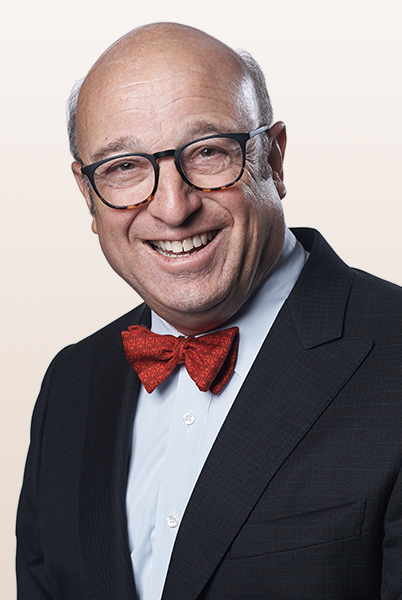 Steven J. Scheinman, MD, FACP, FASN,Dean Emeritus, Geisinger College of Health Sciences; former dean of the School of Medicine at Upstate Medical University; prominent medical researcher, educator and physician
Brennan Hall, Rose Room, 509 • 11:30 a.m. to 1 p.m.
For more information and to register for programs, contact:
570-941-4740
schemelforum@scranton.edu
Library Home Page
Contact Us
Staff Directory
The University of Scranton
Weinberg Memorial Library
Linden & Monroe
Scranton, PA 18510
Library Services: 570-941-4000


