Myers Fellows
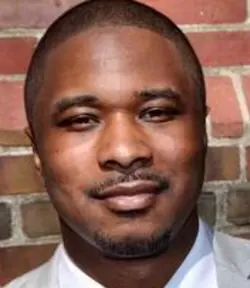
Brandon Terry, Ph.D.
"Shattered Dreams, Infinite Hope"
April 23, 2026
This lecture reimagined the Civil Rights Movement as an unfinished and often tragic struggle rather than a simple narrative of triumph. Dr. Terry will challenge the romanticized historical accounts of this movement and will call for a more honest engagement with conflict, loss, and judgment while maintaining hope for political transformation.
Brandon M. Terry is the John L. Loeb Associate Professor of the Social Sciences at Harvard University and the co-director of the Institute on Policing, Incarceration, and Public Safety at the Hutchins Center for African and African American Research. Born in Baltimore, Terry earned a PhD with distinction in Political Science and African American Studies from Yale University, an MSc in Political Theory Research at the University of Oxford, and an AB, magna cum laude, in Government and African and African American Studies from Harvard College. An award-winning scholar of African American political thought, political theory, and the politics of race and inequality, Brandon is the author of Shattered Dreams, Infinite Hope: A Tragic Vision of the Civil Rights Movement (Harvard University Press). He is also the editor, with Tommie Shelby, of To Shape a New World: Essays on the Political Philosophy of Martin Luther King, Jr. (Harvard University Press, 2018) and the editor of Fifty Years Since MLK (Boston Review/MIT, 2018).
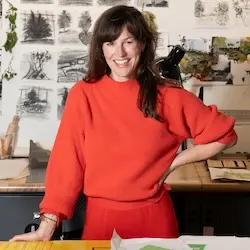
Sara Hendren
"What Can a Body Do? How We Meet the Built World"
October 21, 2024
In this lecture, Hendren will ask what prosthetics, assistive technologies, curb cuts, and elevators can teach us about being human. She'll invite us to consider not just the augmented body of the future, but the ancient and enduring ideas about personhood at the heart of the built world. Bringing together fine arts, philosophy, engineering, and history, Hendren will examine the hidden stories about dignity, suffering, dependence, and beauty in the material culture all around us.
Sara Hendren is an artist, design researcher, writer, and professor at Olin College of Engineering at Harvard University. Her book What Can A Body Do? How We Meet the Built World explores the places where disability shows up in design: an inventive tradition of remaking our everyday tools and environments that also carries the highest human stakes. It was named one of the Best Books of 2020 by NPR and the winner of a Science in Society Journalism prize. Her design work has been widely exhibited around the world—at the Seoul Museum of Art, the Vitra Museum, Dox Centre for Contemporary Art, and the Victoria & Albert Museum, among others—and is held in the permanent collections at MoMA and the Cooper Hewitt. In 2021-22, she was a fellow in Education Policy at the New America think tank, where she researched the future of work for adults with cognitive and developmental disabilities.
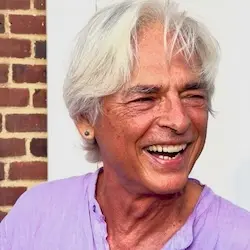
Dale Jamieson, Ph.D.
"How to Live in the Anthropocene"
October 17, 2023
In this lecture, Dr. Jamieson will describe the challenges we face in a time of unprecedented human impact on the Earth, and will then identify some of the resources that we have for meeting these challenges.
Dr. Jamieson is Professor of Environmental Studies and Philosophy, Affiliated Professor of Law, and Director of the Animal Studies Initiative at NYU. He is also Distinguished Visiting Professor at the Dickson Poon School of Law at King’s College, London, and Adjunct Professor at the University of the Sunshine Coast in Australia. Formerly he was Henry R. Luce Professor in Human Dimensions of Global Change at Carleton College, and Professor of Philosophy at the University of Colorado, Boulder, where he was the only faculty member to have won both the Dean's award for research in the social sciences and the Chancellor's award for research in the humanities. He has held visiting appointments at the National Center for Atmospheric Research, Cornell, Princeton, Stanford, Oregon, Arizona State University, and Monash University in Australia.
He is the author of Reason in a Dark Time: Why the Struggle to Stop Climate Change Failed--and What It Means For Our Future (Oxford, 2014), Ethics and the Environment: An Introduction (Cambridge, 2008), and Morality's Progress: Essays on Humans, Other Animals, and the Rest of Nature (Oxford, 2002). He is also the editor or co-editor of nine books, most recently Reflecting on Nature: Readings in Environmental Philosophy, 2nd Edition (Oxford, 2012) with Lori Gruen and Chris Schlottmann, and has published more than one hundred articles and book chapters.
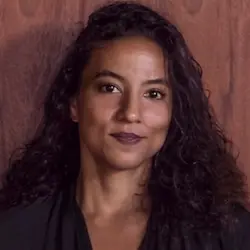
Elizabeth Hinton, Ph.D.
"Riot or Rebellion? The Meaning of Violent Protest from the 1960s to George Floyd"
October 20, 2022
The decades since the civil rights movement are considered by many to be a story of progress toward equal rights and greater inclusiveness. In this lecture, Elizabeth Hinton will uncover an altogether different history, taking us on a troubling journey from Detroit in 1967 and Miami in 1980 to Los Angeles in 1992 and beyond to chart the persistence of structural racism and one of its primary consequences, the so-called urban riot. Dr. Hinton will offer a critical corrective: the word “riot” is nothing less than a racist trope applied to events that can only be properly understood as rebellions--explosions of collective resistance to an unequal and violent order. Challenging the optimistic story of the post-Jim Crow United States, Hinton's discussion will present a new framework for understanding our nation's enduring racial strife.
Dr. Hinton is an Associate Professor in the Department of History and the Department of African American Studies at Yale University, with a secondary appointment as Professor of Law at Yale Law School. Her research focuses on the persistence of poverty, racial inequality, and urban violence in the 20th century United States. She is considered one of the nation’s leading experts on criminalization and policing. Her books include From the War on Poverty to the War on Crime: The Making of Mass Incarceration in America and America on Fire: The Untold History of Police Violence and Black Rebellion Since the 1960s.