
Sarah Liskowicz '23: How I Found My Calling in Clinical Medicine
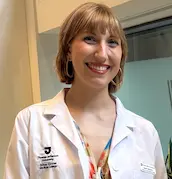
I graduated from the University of Scranton in 2023 with majors in neuroscience and biomathematics and a minor in biochemistry. I chose neuroscience because of its flexibility, interdisciplinary nature and emphasis on research.
At the time, I wanted to pursue a Ph.D. or MD/Ph.D. after graduation, so research was on the forefront of my mind. Thanks to the neuroscience program, I was able to get into a lab the summer before my freshman year even started and get hands-on lab experience right away! This afforded me many opportunities, including presenting my findings at two national neuroscience conferences and participating in a summer internship at Rowan University, which resulted in a co-authorship on a publication.
How Did You Discover Your Passion for Clinical Medicine?
While I loved research and learned so much from it, I discovered my calling was actually in clinical medicine. Because the major is so flexible, I was not boxed into staying on a research track. I was able to explore a variety of interests, whether specifically related to medicine or something of personal interest such as adding the biomathematics major. I even took an independent study course on the novels of Jane Austen! Furthermore, the faculty and other students in the program were immensely supportive in helping me figure out my career path and finding opportunities to gain novel experiences.
Because I had the ability and support to explore all of my interests, I decided to complete a year of service through an AmeriCorps-affiliated program in Los Angeles upon graduation. There, I worked as a case manager at an outpatient community mental health clinic. That year was perhaps the most impactful of my life because of all I learned working in community mental health/social work, along with the lifelong relationships I built.
I then returned home to Wilkes-Barre, Pennsylvania, where I worked in a flower shop while I applied to medical school. Thanks to the neuroscience program and my experiences after graduation, I was accepted into Sidney Kimmel Medical College at Thomas Jefferson University and entered with the class of 2029!
What Would You Tell Students Considering Neuroscience at Scranton?
The neuroscience program provided an incredible educational foundation for success in my work as a case manager and future success in medical school. I also have the skills, support and confidence to try, discover and grow. I truly don't know where I would be had I not taken advantage of the vast opportunities offered by the program, or met the incredibly passionate and caring individuals involved in it.
I am so grateful to the University of Scranton and neuroscience for all it has gifted me, and I hope you also decide to call this place and program your home!