


Kevin Crowston, Ph.D.: Future of Work in the Age of Intelligent Machines
The Department of Computing Sciences and the student chapter of Association for Computing Machinery present:
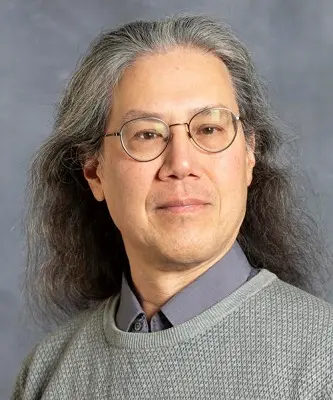
Distinguished ACM Speaker Kevin Crowston, Ph.D.
"Future of Work in the Age of Intelligent Machines"
Friday, April 10, 2026
3 p.m.
LSC 133
To attend remotely, please email noemikover@scranton.edu

Abstract
How are intelligent machines reshaping the nature of work? In this talk, I explore how advances in artificial intelligence and automation are transforming tasks, jobs, and organizations, and what that means for workers and society. I argue that understanding the future of work requires attention not just to what systems can do, but to how they are embedded in socio-technical systems, i.e., combinations of people, technologies, tasks, and institutions.
I trace historical shifts—from the agricultural and industrial revolutions to today’s AI wave—to show how new technologies repeatedly disrupt labor markets, create new roles, and alter the skills workers need. Through real-world examples—from credit card fraud detection to warehouse robotics—I suggest that automation rarely eliminates entire jobs, but instead reconfigures tasks, often pushing workers to the periphery of systems. This shift brings both new opportunities and challenges, including concerns about transparency, accountability, skill development and job satisfaction.
Finally, I offer a forward-looking framework for human-centered AI and the design of hybrid systems that support rather than sideline human expertise. I call on researchers, technologists, and policymakers to help shape systems that are not only technically powerful but also socially responsive and just.
Bio:
Kevin Crowston is a Distinguished Professor of Information Science in the School of Information Studies at Syracuse University. He received an AB in Applied Mathematics (Computer Science) from Harvard and a Ph.D. in Information Technologies from the Massachusetts Institute of Technology (MIT).
His research examines new ways of organizing made possible by the extensive use of information and communications technology. He approaches this issue in several ways: empirical studies of coordination-intensive processes in human organizations (especially virtual or distributed organizations); theoretical characterizations of coordination problems and alternative methods for managing them; and design and empirical evaluation of systems to support people working together. Specific research topics include the development practices of Free/Libre Open Source Software teams and work practices and technology support for citizen science research projects, both with NSF support. His most recent project is a study of the evolution of newswork with new technologies.
He is currently Editor-in-Chief for the journal Information, Technology & People and the past EiC for ACM Transaction on Social Computing. Other involvement with ACM includes serving on conference committees (mostly for the CSCW conference).